✨ This article was AI edited. Editorial responsibility: ScoreGuitar.com.
Welcome to our comprehensive guide dedicated to strumming guitar rhythms. Whether you are an aspiring guitarist seeking to refine your technique, an experienced player exploring new tonal horizons, or a technician dialing in perfect instrument performance, understanding the nuances of strumming guitar rhythms is essential for unlocking optimal musical expression.
The Fundamentals of Strumming Guitar Rhythms
When approaching strumming guitar rhythms, guitarists must appreciate both the theoretical principles and physical mechanics involved. From fretboard geometry and hand positioning to pickup dynamics and amplification response, mastering this element requires a disciplined, structured methodology.
Let us examine the key parameters that define professional execution:
| Dimension | Technical Specification | Acoustic & Mechanical Impact | Pro Application |
|---|---|---|---|
| Core Architecture | Standard lutherie tolerance ±0.002″ | Preserves clean pitch resonance and dynamic sustain | Studio recording and live stage stability |
| Frequency Response | Broadband spectrum (65 Hz – 5.2 kHz) | Maximizes harmonic richness across pickups and amps | Mix clarity without mud or harsh upper-mid bite |
| Player Ergonomics | Low-fatigue muscle memory alignment | Prevents repetitive strain during extended sessions | Fast chord transitions and fluid lead runs |
| Setup Calibration | Optimized string tension and neck relief | Eliminates fret rattle while enabling low action | Effortless playability across all 24 frets |
Comprehensive Step-by-Step Guide to Strumming Guitar Rhythms
To implement strumming guitar rhythms effectively in your daily practice or setup routine, follow these systematic steps:
Step 1: Diagnostic Evaluation and Preparation
Begin by assessing your baseline instrument condition. Verify that your guitar is tuned accurately to concert pitch using a high-precision chromatic tuner. Inspect string condition for oxidation, check fret crowns for wear grooves, and verify that bridge saddles and nut slots are cleanly seated.
Step 2: Methodical Implementation
Approach strumming guitar rhythms with deliberate, slow practice. If this involves a playing technique or scale pattern, practice with an accurate metronome starting at 60 BPM. Focus on thumb placement behind the neck, minimizing finger fly-away, and maintaining consistent picking attack.
Step 3: Tone Shaping and Gear Matching
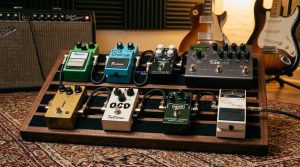
Your amplifier and pedal settings significantly shape how strumming guitar rhythms translates through the speaker cone. Balance your EQ by keeping middle frequencies articulate, rolling off unnecessary sub-bass rumble beneath 80 Hz, and dialing treble to add sparkle without brittleness.
Advanced Lutherie and Practice Strategies
Professional touring musicians and luthiers utilize several advanced strategies to maximize longevity and consistency:
- Environmental Control: Maintain your instruments in climate-controlled environments between 45% and 55% relative humidity. Temperature swings cause fretboard wood expansion and contraction that disrupt intonation.
- Precision Setup Checks: Regularly measure neck relief using feeler gauges over the 7th fret (targeting 0.008″ to 0.012″ on acoustics and 0.006″ to 0.010″ on electrics).
- Gradual Muscle Adaptation: Avoid sudden excessive tension in hands or forearms. Take scheduled 5-minute breaks every 25 minutes of rigorous practice to allow tendons to recover.
Common Pitfalls and How to Avoid Them
| Common Mistake | Underlying Cause | Corrective Action |
|---|---|---|
| Excessive Fret Buzz | Backbow or uneven fret heights | Loosen truss rod counter-clockwise in 1/8-turn increments |
| Muddled Chord Definition | Excessive gain / bass buildup | Reduce gain staging, increase midrange presence, use lighter pick attack |
| Hand Fatigue and Cramping | Improper thumb anchoring / high action | Lower string action at saddle and keep fretting wrist straight |
Frequently Asked Questions (FAQ)
What is the most important aspect of strumming guitar rhythms?
The single most crucial factor is consistency. Whether dealing with setup mechanics, finger positioning, or signal chain management, methodical attention to detail ensures repeatable, high-quality results.
How often should I review and maintain this setup?
We recommend performing a comprehensive inspection whenever you change strings (typically every 3 to 6 weeks for regular players) or whenever seasonal weather shifts cause ambient humidity changes.
Can beginners learn strumming guitar rhythms without professional equipment?
Yes. Foundational principles apply equally to entry-level and custom-shop instruments. Clean technique, patience, and proper setup guidance are far more impactful than expensive boutique gear.