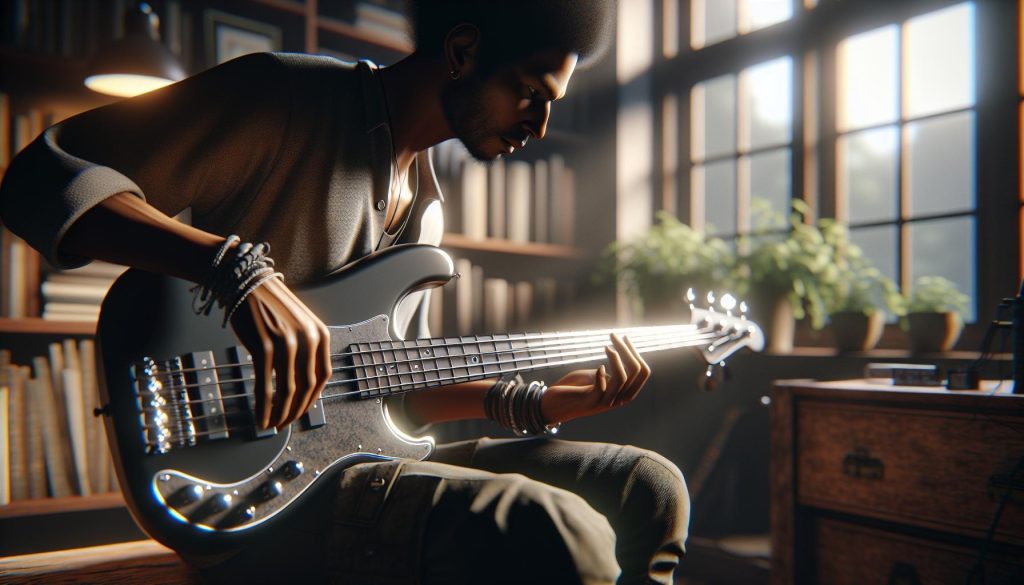
If you’re looking to add a powerful low end to your bass guitar playing, understanding Drop D tuning is essential. By tuning your bass to Drop D, you lower the pitch of your lowest string to D, creating a darker, heavier sound that can enhance your music’s depth and impact, particularly in genres like rock and metal. This alternative tuning not only simplifies playing power chords but also opens up new sonic possibilities for creative expression. Imagine effortlessly transitioning between soaring melodies and thunderous bass lines with ease! Whether you’re a beginner seeking to diversify your sound palette or an experienced player aiming for that massive tonal presence, exploring Drop D tuning can elevate your performance. Dive in as we uncover how to master this technique, the benefits it brings, and tips for integrating it into your playing style. Get ready to unlock the full potential of your bass guitar!
What is Drop D Tuning and Why Use It?

Drop D tuning is a popular alternative tuning method that allows bass guitarists to explore deeper tonal landscapes while maintaining the ability to play familiar chord shapes and scales. By lowering the lowest string from E to D, musicians instantly gain access to a broader range of notes and a heavier sound, making it a favorite among genres such as rock, metal, and alternative music. This simplified tuning opens the door for powerful riffs and bass lines, giving songs a unique punch and character.
Using Drop D tuning can provide several advantages for a bassist. One primary benefit is the convenience it offers in playing power chords, which are a staple in many rock songs. With this tuning, a simple finger position can produce a D power chord by simply barring across the first few frets, allowing for quick transitions and simpler finger movements. This ease of play encourages experimentation, enabling bassists to craft memorable lines that stand out in a mix.
Additionally, the altered pitch can significantly affect a band’s overall sound, enriching the harmonic content and providing a heavier low-end presence. Bassists looking to achieve massive tones can utilize Drop D to dive into more complex musical structures without sacrificing clarity. By creating a foundation that supports the rest of the band, players can elevate their performances and explore the depth of their instrument with greater freedom.
With Drop D tuning, players can effectively expand their sonic palette, leading to innovative approaches in composition and performance. Whether you are a beginner learning new techniques or an experienced musician seeking new inspiration, embracing Drop D tuning can unlock new creative avenues on the bass guitar.
Benefits of Drop D Tuning for Bass Guitar

Tuning your bass guitar to Drop D opens up a world of sonic possibilities, radically transforming how you approach riffs and progressions. One of the most significant benefits of this tuning lies in its ability to create a thunderous sound that will shake the venue, elevating your playing to new heights. By lowering the lowest string from E to D, bassists can easily access power chords and intricate bass lines that resonate deeply with the music, making it a favorite choice among rock and metal genres.
The practicality of Drop D tuning cannot be overstated. With just a slight adjustment, you can achieve a rich and full sound while maintaining familiar fingerings. For instance, many bassists find that the standard shapes they already know can be easily adapted. Suddenly, you have access to a wider array of notes tethered to the natural resonance of D, allowing you to craft more complex arrangements while effortlessly integrating them into existing songs. This ease of play encourages creativity, giving rise to new riffs and grooves that might not have been possible in standard tuning.
Moreover, the harmonic depth provided by Drop D can enrich your band’s overall sound. The lower pitch contributes significantly to the mix, enhancing the sonic foundation beneath guitars and vocals. This allows bassists to provide a strong backbone to a song, resulting in a fuller and more dynamic performance. It’s not just about volume; the frequency range achieved in Drop D leads to a more powerful low end that engages listeners on a physical level.
In terms of composition, Drop D encourages innovation. By embracing this tuning, you allow yourself the flexibility to explore new melodic ideas and rhythmic patterns. Whether you’re crafting a groove-driven riff or a complex melodic line, the naturally occurring notes in the lower register provide ample inspiration. Additionally, since many popular songs utilize Drop D, exploring this tuning puts you in touch with a vast repertoire, enhancing your ability to play alongside other musicians or in different settings.
In summary, Drop D tuning is a powerful tool for bassists. By unlocking deeper tones and simplifying chord transitions, you can establish yourself as a versatile musician capable of delivering impactful performances. Whether you are looking to capture a driving sound, explore new melodies, or enhance your band’s overall dynamics, tuning to Drop D will facilitate your creative journey while ensuring you maintain a commanding presence in the mix.
How to Tune Your Bass Guitar to Drop D
To get your bass guitar into Drop D tuning, it helps to understand that this tuning only requires adjustment to the lowest string, which is typically tuned to E. You’ll be tuning this sixth string down to D, making it a straightforward process that can immensely expand your tonal possibilities. Here’s a simple guide to help you achieve this iconic sound effectively.
Start by using a tuner, which can be a clip-on or an app on your smartphone. If you’re tuning by ear, you can use a reference pitch from a piano or another instrument. Play the open D string (fourth string) and tune the sixth string down from E to D by listening and matching the pitch. It’s essential to tune down slowly to avoid breaking the string, as it’s under considerable tension when tuned to E.
A common method involves the following steps:
- Check Your Tuner:
– Ensure your tuner is set to standard tuning.
- Tune the D String:
– Use the fourth string as a reference. Play the D note on the fourth string while tuning your sixth string down to match it.
- Adjust the Pitch:
– When the tuner indicates you are at D, double-check that both strings sound harmonious when played together.
- Fine-tune:
– After tuning, play some notes on the sixth string and listen for any discrepancies. Make small adjustments as needed until you’re satisfied with the pitch.
- Re-tune if Necessary:
– It’s always a good idea to revisit the tuning after playing for a few minutes, as strings can stretch and go slightly out of tune.
By adopting this tuning method, you not only make the most of your bass’s capabilities but also gain access to a range of musical styles that benefit from the deeper tones of Drop D. Whether you’re looking to play heavier genres or delve into unique melodics, this simple adjustment could be a game-changer for your sound.
Lastly, remember that maintaining your instrument is key. Regularly check your strings, tuning pegs, and overall setup to ensure you can easily switch between standard and Drop D tuning, further enhancing your versatility as a bassist.
Essential Gear for Achieving Massive Low End
To truly harness the deep, resonant sound of Drop D tuning on your bass guitar, selecting the right gear is essential. The richer harmonic content and expansive low end that this tuning provides can be brilliantly amplified with a few key tools. Primarily, the type of strings you choose plays a crucial role. Opting for heavier gauge strings can significantly enhance your bass’s overall depth and sustain, particularly when dropped to D. This added thickness helps capture the fuller low frequencies that heavier styles demand.
Investing in a quality amplifier is equally important. Look for amps that feature a dedicated low-frequency response or an enhanced EQ section where you can boost the bass effectively. Amps with a tube preamp are often appreciated for their warmth and richness, which can add a character to your sound that complements the heavier tones of Drop D well. When choosing speakers, consider models that can handle lower frequencies without distortion-12″ speaker configurations are typically ideal as they provide a balanced sound, while 15″ speakers excel in delivering massive low end.
In addition to strings and amplification, effects pedals can radically influence your sound. A compressor pedal is invaluable, helping to even out the dynamics of your playing while enhancing sustain. For a more aggressive sound characteristic of many Drop D compositions, consider overdrive or distortion pedals. These can add grit without losing the fundamental clarity of your notes.
Lastly, using a tuner pedal not only provides pitch accuracy but can also streamline your transitioning between standard and Drop D tuning during performances, ensuring that your setup remains as efficient as possible, allowing you to focus on your creativity rather than technicalities. Embracing these gear choices gives you the flexibility and depth necessary to explore the full potential of your bass guitar in Drop D tuning, empowering you to create and perform with confidence.
Techniques to Maximize Your Sound in Drop D

To truly unleash the potential of Drop D tuning on your bass guitar, employing effective techniques can significantly elevate your sound. One of the most powerful methods is the use of octave playing. By combining the root note on the low D string with higher octave notes on adjacent strings, you not only enhance the harmonic richness but also create a fuller sonic landscape. For instance, playing the D note on the open sixth string while simultaneously fretting the seventh fret on the fifth string provides a robust and resonant sound that fills out the mix beautifully.
Another technique to consider is palm muting. This approach can add a percussive element to your playing, especially beneficial in heavier genres. By lightly resting your palm on the strings near the bridge while plucking the notes, you dampen the reverberation. This creates a punchy, controlled sound that is perfect for driving rhythms. Moreover, varying the intensity of your palm muting during phrases adds dynamics to your performance, keeping it engaging and expressive.
Incorporating harmonics can also yield extraordinary results. The transition between fretted notes and natural harmonics on the seventh and twelfth frets allows you to mix textures seamlessly. Harmonics can offer a sublime contrast to the heavier, deeper notes typical of Drop D tuning, making your bass lines more versatile and captivating. This serves especially well in intros or breakdown sections, where you want to catch the listener’s ear with something unexpected.
Lastly, embracing fingerstyle or slap techniques can further enhance the sonic palette you achieve in Drop D. Slapping provides a sharp attack and funky sound, while fingerstyle allows for more subtle nuances and control over dynamics. Mixing these styles within a single piece can create a varied and interesting auditory experience. By experimenting with these techniques, you’ll not only maximize the sound of your bass guitar in Drop D tuning but also expand your overall musicianship.
Popular Songs Featuring Drop D Tuning
Drop D tuning has gained significant popularity among musicians looking for a deeper, more powerful sound, particularly in rock and metal genres. This tuning allows for easier power chords, rich bass lines, and dynamic compositions by dropping the sixth string down to D. Numerous iconic songs feature Drop D tuning, showcasing its versatility and impact.
Some of the most notable tracks that utilize Drop D tuning include:
- “Everlong” by Foo Fighters
- “Kashmir” by Led Zeppelin
- “Creep” by Radiohead
- “Black” by Pearl Jam
- “Map of the Problematique” by Muse
- “Suck My Kiss” by Red Hot Chili Peppers
These songs illustrate how Drop D can elevate riffs and bass lines, providing a heavier sound that resonates with listeners. In “Everlong,” for instance, the tuning contributes to the song’s melodic drive and dynamic shifts. Similarly, “Kashmir” leverages Drop D to create its hypnotic, powerful progression that has captivated audiences for decades.
Experimenting with these tracks in your practice sessions can provide deeper insights into the tuning’s possibilities. Whether you’re crafting original compositions or jamming along with these classics, understanding how established artists use Drop D can inspire your own musical journey. By immersing yourself in these songs, you’ll notice how the tuning enhances the emotional depth and musicality, enabling you to achieve that massive low end characteristic of Drop D tuning.
Exploring Alternative Tuning Methods for Bass Guitar
The world of alternative tunings offers bass players a vibrant landscape to explore, providing opportunities to create unique sounds and textures. Beyond the widely embraced Drop D tuning, which lowers the sixth string for a powerful low end, there are several other tunings that can similarly enhance your playing and broaden your musical palette. Diversifying your tuning can unlock fresh possibilities in songwriting and improvisation, allowing for richer harmonics and dramatically different tonal characteristics.
One of the appealing alternative tunings is Drop C, where the bass is tuned two whole steps down from standard tuning. This tuning suits heavier genres like metal and hard rock, providing a deeper growl to riffs and allowing for thunderous power chords. Musicians often find that Drop C creates space for dynamic bass lines that resonate alongside distorted guitar tones, making it a favorite in many contemporary bands.
Another interesting option is Open D Tuning, where the strings are tuned to D A D F# A D. This tuning creates a full, resonant sound, ideal for fingerstyle playing and complex chord voicings. When utilizing Open D, bassists can enhance their roles in various musical settings, especially in folk or blues genres, where the rich overtones can complement vocal melodies beautifully.
For those looking to venture into more unconventional territories, C-G-D-G-C tuning-often referred to as “C Tuning” or “C Low”-is worth exploring. This tuning gives players unprecedented access to lower notes while maintaining a familiar string structure, enabling innovative approaches to melody and bass line creation.
Whether you’re exploring these tunings or sticking with Drop D, experimenting will help you discover which resonates best with your musical style. Don’t be afraid to break away from traditional methods; each alternative tuning is a gateway to new creative expressions that can significantly enhance your bass playing.
Common Mistakes to Avoid with Drop D Tuning
The transition to Drop D tuning can unlock a world of sonic possibilities for bass players seeking a massive low end, but there are common pitfalls that can hinder this exciting journey. Many musicians dive into Drop D expecting instant gratification, only to be met with frustration because of simple mistakes that can easily be avoided. Understanding these common errors will not only enhance your experience but also elevate your overall sound.
One frequent mistake is neglecting to check intonation after tuning down. When you lower the pitch of your bass strings, the intonation can change, affecting your tuning across the fretboard. Make sure to verify that each string stays in tune as you play up and down the neck. Use a tuner to ensure that when you fret notes, they ring true, which is essential for maintaining a solid foundation in your playing.
Another error involves underestimating the changes in string tension. Lowering the sixth string to D can impact how the instrument feels and responds, particularly if you switch between standard tuning and Drop D frequently. Adjusting your technique, like finger positioning and picking style, is often necessary to accommodate the looser feel of the downtuned string. Pay attention to how your bass reacts, as it may require slight modifications in your playing approach to maintain control and clarity.
Not capitalizing on the effects of the Drop D tuning can also be an oversight. Many players rely solely on power chords without exploring the full potential of the tuning. Try experimenting with different scales, arpeggios, and fingerstyle techniques that leverage the lower tones. This exploration can lead to unique compositions and a richer musical expression.
Finally, avoiding Drop D for specific genres or styles can limit your creativity. Although Drop D is popular in rock and metal contexts, it has valuable applications in funk, blues, and even jazz. Embrace the versatility of this tuning to expand your musical repertoire and breathe new life into your bass lines. By steering clear of these common mistakes, you’ll find that Drop D tuning can be a powerful tool in your musical arsenal, capable of transforming your sound and enhancing your performance.
Advanced Playing Techniques in Drop D Tuning
In the realm of bass guitar playing, Drop D tuning opens up an exciting landscape of possibilities, enabling bassists to blend melody with powerful low-end rhythms seamlessly. Advanced techniques in this tuning can elevate both live performances and studio recordings, allowing for a unique depth of sound. One of the most effective approaches is incorporating the use of harmonics. The lower pitch of the sixth string combined with the natural harmonics available on other strings creates a rich auditory texture, perfect for developing resonant bass lines that stand out.
Another technique to explore is the incorporation of slap and pop styles, which can be particularly effective in Drop D tuning. This not only enriches your play repertoire but also enhances percussive elements in your lines. For instance, while maintaining a rhythm with your thumb, experiment with popping the D string to create a pronounced, snappy response that complements lower notes. Additionally, using a combination of fretted notes and harmonics can add significant flair to your performances.
Playing with rhythmic variation is crucial when leveraging the power of Drop D tuning. Syncopation and dynamic shifts can provide engaging hooks that captivate listeners. This can be achieved through techniques like ghost notes, where you lightly touch the string while plucking, producing a subtle rhythmic element without a distinct pitch. Combining this with other techniques, such as walking bass lines or bluesy bends, helps develop intricate patterns that draw attention and invite further exploration of the tuning’s capabilities.
Finally, don’t shy away from incorporating effects pedals into your sound. Effects such as overdrive and delay can drastically transform how Drop D feels in a performance context. By enhancing the natural depth of the tuned strings, these effects allow you to craft a sonic experience that resonates across various genres, from rock to metal and even funk or jazz. Experiment with different combinations to suit your performance needs, while always remembering to assess how these modifications interact with the dynamics of your bass lines.
Incorporating these advanced techniques not only enhances your mastery of Drop D tuning but empowers you to communicate your musical ideas more effectively and artistically. The rich tonal palette available through Drop D is ripe for exploration; harness it wisely to create captivating sounds that leave a lasting impact.
The Influence of Drop D on Bass Lines and Genres
Drop D tuning is a game changer for bass players looking to infuse their lines with an unprecedented level of depth and resonance. By lowering the sixth string to a D, bassists unlock a plethora of opportunities for crafting bass lines that resonate through both rhythm and melody. This tuning system not only provides a powerful foundation but also allows exploration of various styles and genres, making it a favorite among rock, metal, and blues musicians.
One of the most notable influences of Drop D on bass lines is the ease with which power chords can be played. In this tuning, bassists can create robust, driving rhythms using just one finger, simplifying transitions between chords and allowing for a more fluid playing style. This capability is particularly advantageous in rock and metal, where such power chords create the energetic undercurrent that supports heavier guitar riffs. Furthermore, the open D string offers a strong pedal point, allowing bassists to build dynamic melodies around it while maintaining a sturdy rhythmic backbone.
In terms of genre influence, Drop D tuning has been integral in shaping modern heavy music. Many iconic tracks from bands like Tool and Soundgarden utilize this tuning to craft intricate and atmospheric soundscapes. The ability to explore lower frequencies not only enhances the overall sound mix but also encourages players to embrace an experimental approach, pushing the boundaries of traditional bass lines. For instance, exploring techniques like tapping and frequent use of harmonics can lead to memorable melodies that define a song’s character.
Additionally, the versatility of Drop D makes it suitable for genres beyond rock and metal, touching on jazz, funk, and reggae. The tuning allows for smoother transitions between rhythms, enabling bassists to incorporate syncopated grooves that are essential in funk music. Utilizing slap and pop techniques in Drop D can produce a percussive yet melodic sound that resonates with audiences, showcasing the bass guitar’s role as both a rhythmic and melodic instrument.
Overall, the profound influence of Drop D tuning on bass lines and musical genres cannot be overstated. This tuning not only amplifies the sonic possibilities available to bassists but also serves as an invitation to explore and expand their musical creativity. Whether you’re laying down foundational grooves or highlighting catchy hooks, Drop D is a tuning that paves the way for innovation in bass playing.
Tips for Composing in Drop D Tuning
Composing in Drop D tuning opens up a world of sonic possibilities for bassists, allowing for rich, resonant tones that can deeply impact your compositions. To effectively harness this tuning, start by embracing its inherent strengths. One of the most significant advantages of Drop D is the ability to play powerful, low-end riffs effortlessly. Experiment with bass lines that take advantage of the open D string; this can serve as a pivot point, enabling fluid movement between notes while maintaining a strong foundational sound.
Utilizing Power Chords and Melodic Lines
Consider incorporating power chords into your compositions. In Drop D tuning, power chords are remarkably easy to execute, typically requiring only one finger to barre across strings. This ease of play allows you to focus on other musical elements like rhythm and dynamics. Try crafting your verses or choruses around straightforward, driving power chords that complement heavier guitar riffs. Once you’ve established a solid foundation, layer in melodic lines that weave around these chords, creating a dynamic interplay between rhythm and melody.
Exploring Rhythmic Grooves
When it comes to styling your compositions, rhythm is key. Drop D tuning facilitates exploration of various rhythmic patterns, particularly for styles like funk or metal. Try alternating between syncopated grooves and straight eighth notes to develop a unique rhythm that captures attention. Experiment with techniques like slap and pop to add percussive elements to your phrases, enhancing the groove and making it more engaging.
Incorporating Harmonics and Advanced Techniques
Lastly, don’t shy away from using advanced techniques such as harmonics and tapping. Drop D tuning provides ample opportunity to explore these methods, particularly with the open string as a foundation. Create eerie, atmospheric melodies by combining harmonics played on lower strings while allowing the open D to ring out. This can add a haunting quality to your music, providing depth and texture. Use tapping to quickly ascend or descend the fretboard, crafting thrilling phrases that keep listeners on their toes.
By leveraging the unique characteristics of Drop D tuning-such as its simplified power chord structure, robust low-end, and versatility in rhythmic and melodic exploration-you can elevate your compositions and add a compelling dimension to your music that resonates deeply with your audience.
Maintaining Your Bass Guitar for Drop D Performance
Ensuring your bass guitar remains in optimal condition for Drop D tuning is crucial for achieving that powerful low-end sound that characterizes this style. Regular maintenance not only enhances performance but also prolongs the life of your instrument. Here are essential tips to help you maintain your bass guitar effectively.
Start by checking the neck relief. The tension created by tuning the low E string down to D can cause the neck to bow slightly, impacting playability. Use a capo on the first fret and press down on the last fret of the lowest string. Measure the string height at the 8th fret; if it feels too high, you may need to adjust the truss rod. Make small increments when adjusting, and allow time for the neck to settle.
Next, consider the strings you use. Opt for heavier gauge strings as they can handle the increased tension better in Drop D tuning. Strings such as .050-.105 or .045-.105 can provide a richer tone and enhance sustain. Regularly change your strings, as worn-out strings can lead to dull sounds and intonation issues. Consider using a string cleaner to maintain their clarity and lifespan.
Additionally, pay attention to your bridge and nut. Ensure that the bridge saddles are correctly adjusted to maintain proper intonation. When tuning down to Drop D, the nut slots should not pinch the strings; consider using graphite or nut lubricants for smoother action. Regularly cleaning the bridge and nut will also prevent buildup that could impact sound quality.
Always keep your bass guitar clean. Dust and oils from fingers can accumulate on the fretboard and body, dampening your instrument’s resonance. Use a soft, dry cloth for cleaning, and consider lemon oil for the fretboard to keep it moisturized and reduce wear.
Lastly, performing a periodic full setup-checking electronics, string height, and pickup height-can dramatically enhance your instrument’s overall sound and playability. By dedicating some time to these maintenance tasks, you’re not only preparing for a successful Drop D performance but also ensuring that your investment in your bass guitar pays off in the long run.
FAQ
Q: What is Drop D tuning for bass guitar?
A: Drop D tuning for bass guitar involves tuning the lowest E string down to D, resulting in a DADG configuration. This setup emphasizes a lower register, making it ideal for achieving a massive low-end sound that enhances power chords and grooves in various genres.
Q: Why should I use Drop D tuning on my bass guitar?
A: Using Drop D tuning allows for greater flexibility in playing power chords and complex bass lines, providing a heavier and deeper sound. It’s especially popular in rock, metal, and blues, making it a valuable tool for musicians seeking to add depth to their performances.
Q: How do you tune a bass guitar to Drop D?
A: To tune your bass guitar to Drop D, lower your 6th string from E down to D. You can use a tuner, a tuning app, or match the pitch with another instrument. This method is simple and prepares your bass for a heavier sound.
Q: What are the benefits of Drop D tuning for bass players?
A: Benefits include easier access to power chords, a richer tone, and more creative freedom in writing bass lines. It allows players to utilize lower notes effectively, which can create a fuller sound in ensemble settings, enhancing the overall mix.
Q: What gear do I need for effective Drop D performance?
A: Essential gear includes a quality bass guitar capable of tuning to Drop D, a reliable tuner, and possibly flatwound strings for a smoother tone. A suitable amplifier that can handle lower frequencies can also enhance your sound when playing in Drop D.
Q: How does Drop D tuning influence bass lines and music genres?
A: Drop D tuning allows bassists to create heavier, more resonant lines which are fundamental in genres like metal and grunge. This tuning supports aggressive playing styles and lets musicians explore new rhythmic patterns and melodies not easily achieved in standard tuning.
Q: What common mistakes should I avoid when using Drop D tuning?
A: Common mistakes include not properly intonating your bass after tuning, ignoring string gauge adjustments, and neglecting to experiment with finger positioning. Ensure your bass is well-maintained and regularly check your tuning for optimal performance.
Q: Can I compose music in Drop D tuning?
A: Yes, composing in Drop D tuning can introduce new melodic and harmonic possibilities. Try starting with a simple power chord progression or bass line, which can inspire unique riffs and songs that leverage the lower tuning for a more powerful sound.
For more in-depth information on Drop D tuning, you can check out the sections on benefits, essential gear, and techniques to maximize your sound on your bass guitar.
To Conclude
Now that you’ve uncovered the massive low-end potential of Drop D tuning for your bass guitar, it’s time to put your newfound knowledge into action! Whether you’re diving into rock, blues, or metal, this tuning can significantly enhance your sound. Don’t hesitate to explore other techniques that complement your playing style-check out our articles on Alternate Tunings for Bass and Power Chord Progressions to broaden your musical repertoire.
If you’re eager to further elevate your bass skills, consider subscribing to our newsletter for exclusive tips, gear reviews, and tutorials designed for players of all levels. Share your experiences and questions in the comments below; we love hearing from our community! Remember, mastering Drop D tuning is just the beginning. Stay invested in your growth as a musician, and let’s keep this journey going together. Your next musical milestone is just a click away!